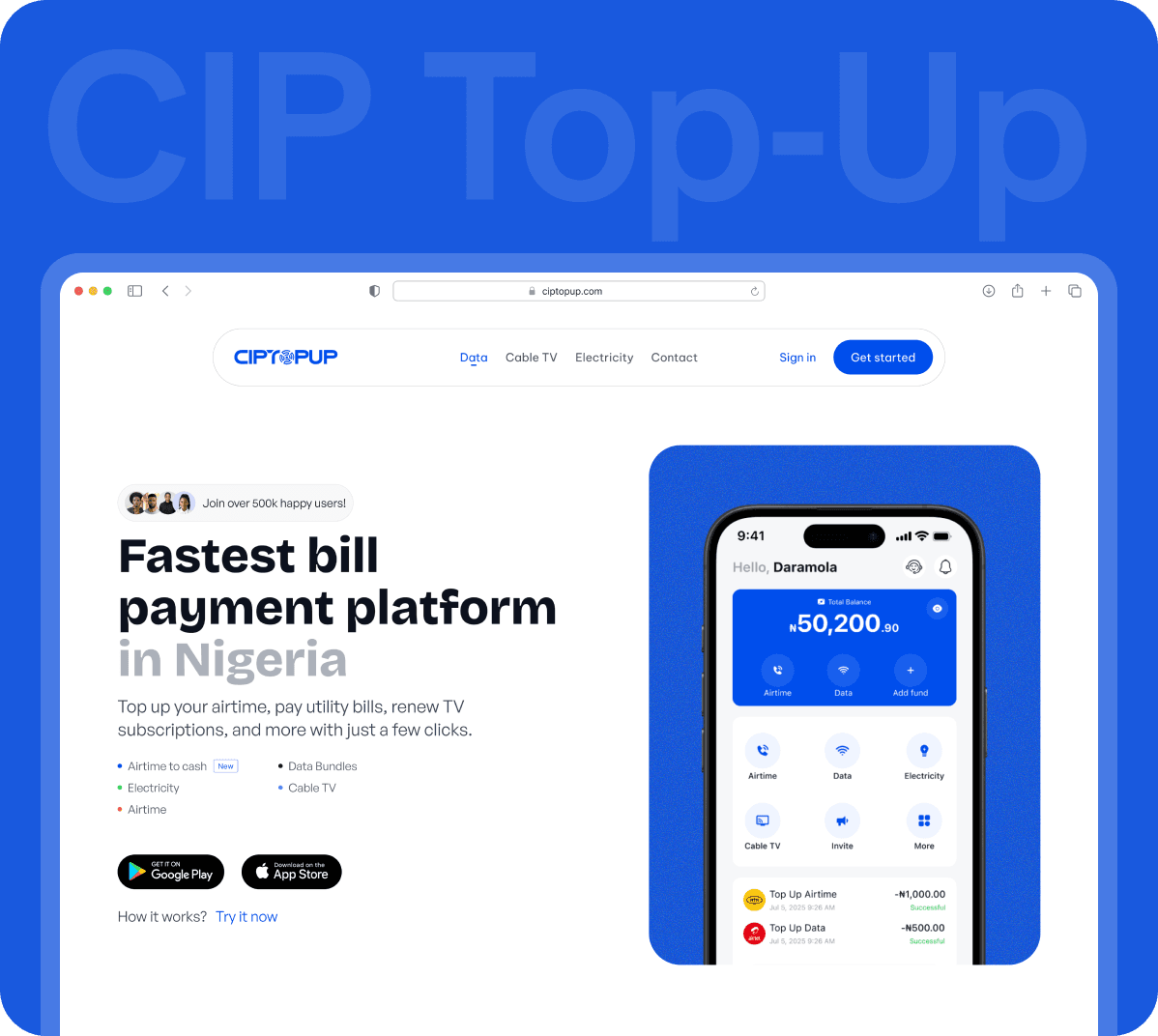
The app is what customers see. The web and admin platform is where the business is actually run.
The starting point
CIP TopUp was already live and moving real money. The problem was underneath it.
Years of technical debt had turned the platform into a drag on the business. Transaction processing was slow and unreliable, so timeouts and abandoned journeys were routine. Security exposure had grown quietly. The infrastructure was outdated and expensive to keep alive, with downtime that nobody could plan around. And the interfaces, on both the customer side and the admin side, were clunky enough to damage how people saw the brand.
None of these were isolated issues. They compounded each other, and by the time we came in, incremental fixes were no longer the answer.
The decision
Rebuild, on a stack the team could keep.
We moved the core application onto TypeScript and Python, with maintainability, security and scale treated as first-class goals rather than promises for later. A modern codebase matters for one practical reason in Nigeria: you can hire for it. The team that runs this platform after us should never be trapped with a stack only one person understands.
We also agreed on one non-negotiable rule. Zero downtime. A payments platform cannot go offline to get better, so the migration had to be invisible to the people using it.
What we built
- Modern, high-performance web applications for customers.
- An admin portal built for high-stakes operations, with real-time business insight and strict role-based permissions.
- A fully native mobile app for the customers who live on their phones. The technical story of that app is in the CIP TopUp mobile case study.
- Over-the-air updates, so we could ship fixes and features without waiting on app store review cycles.
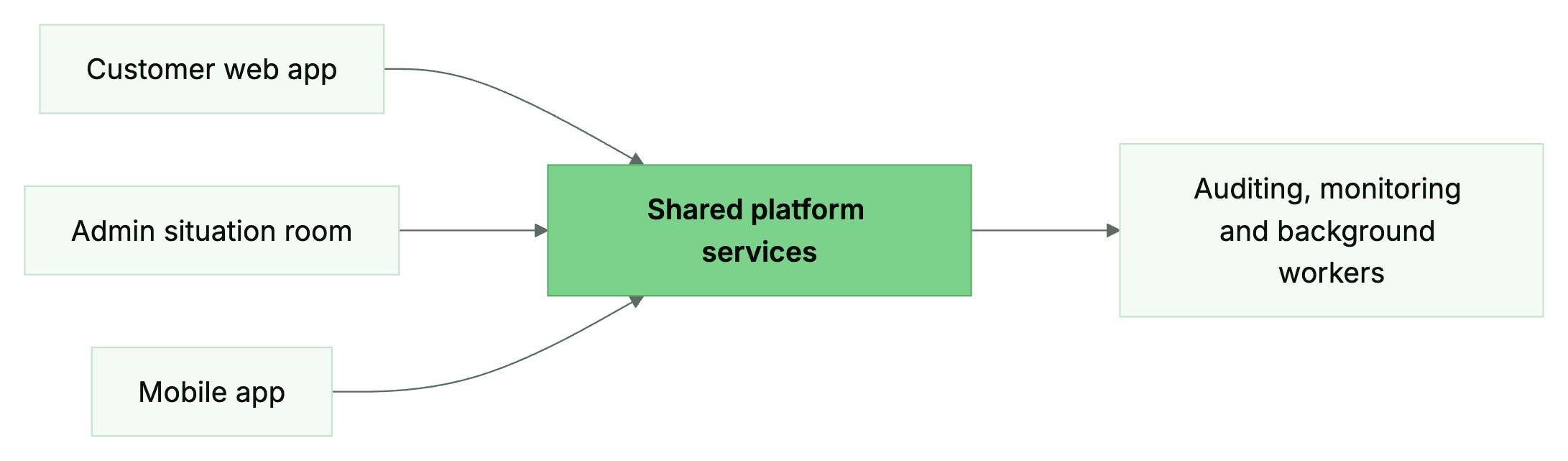
- Purpose-built microservices for auditing, real-time monitoring and alerting, background jobs and other operational work.
The admin side and the control room
Most of the interesting work is invisible to customers. The admin portal is designed for the moments that decide whether a platform keeps its reputation: a provider going down at 2am, a spike in failed transactions, a dispute that needs a full history.
Around it, the monitoring and audit services mean problems are seen and recorded, not discovered by angry customers. Circuit breakers on the provider calls are the standard reference for this pattern, and Microsoft documents the approach in its Azure Architecture Center. In a business where trust is the product, the control room matters as much as the shopfront.
The results
The modernisation landed within four months, with no interruption to the people using the platform.
On the web platform
- Completed purchases through the web platform rose by 30%, helped by a checkout that no longer asks anyone to register first. We call these anonymous try pages. A buyer can add to cart, pay and leave without creating an account or making a commitment, which removed the largest drop-off point in the old flow.
- Because those buyers arrive without an account, they can be retargeted. That turned a checkout decision into a marketing audience, and revenue and reach improved together rather than trading off.
- Organic search traffic rose by about 22% after the migration, as the rebuilt pages became easier for Google to crawl and index.
- The migration completed with zero downtime. Not a single transaction was interrupted while the platform moved.
On the mobile app
- The user base grew by about 80%.
- The Play Store rating rose from 3.9 to 4.3.
- The App Store rating rose from around 1.x to about 3.x.
- Crash and Application Not Responding (ANR) rates dropped from 38% to 0.2%.
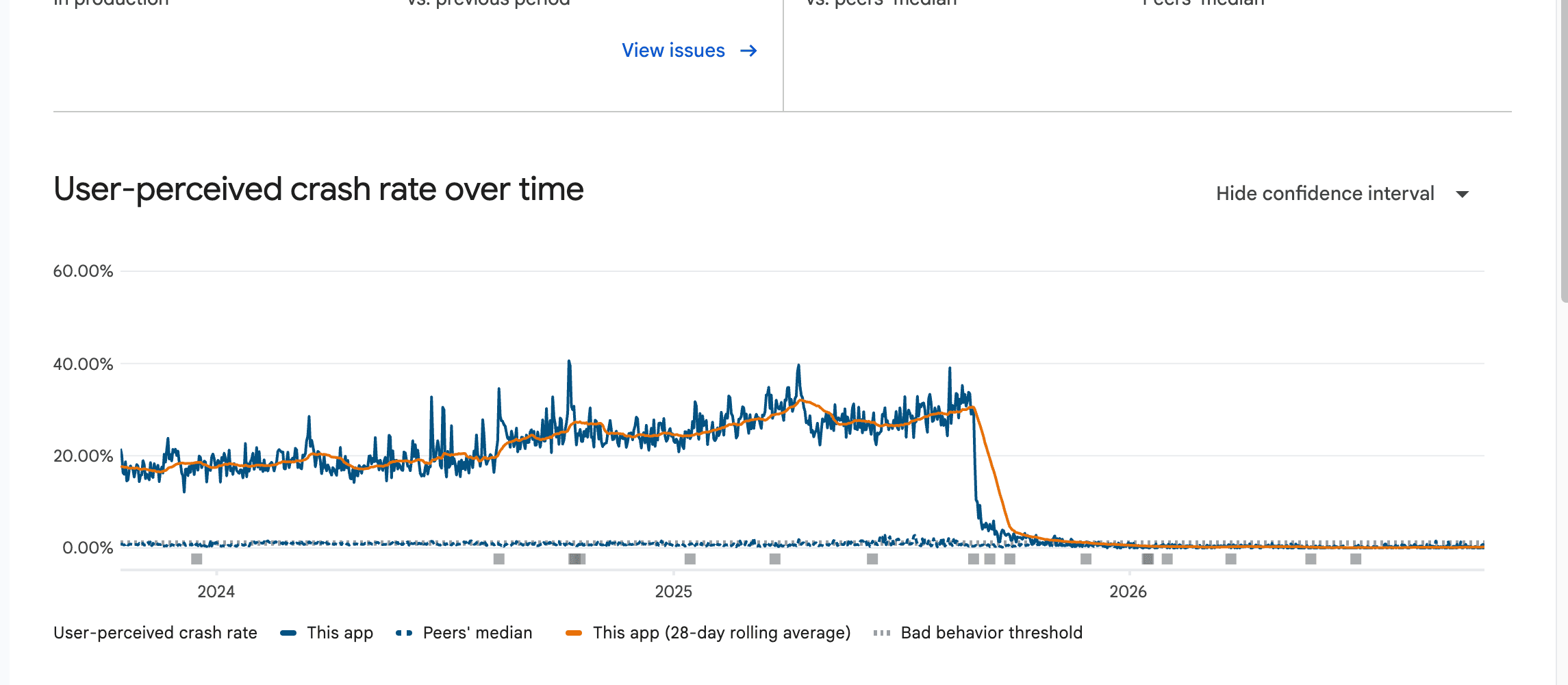
Behind those numbers is a simpler change. The platform stopped being the thing that held the business back, and became something the team could build on again.
What we would do differently
We would design the records and the observability layer first.
When you rebuild a financial platform, the audit trail and the monitoring are not side quests. They are how you prove what happened and catch problems early. We would model both from the first commit, and treat reliability as a feature with an owner, not a background hope.
Build with us
If your platform has become the thing slowing you down, we have rebuilt one like it without taking it offline. Talk to us.
You can see the customer-facing platform at ciptopup.ng, and the merchant platform that sits behind it at ciptopup.ng/signup.
Related Projects

Chinese Wheels Web App
A cross-border marketplace connecting African buyers with verified Chinese vehicle suppliers, with escrow payments and automatic clearing agent matching.
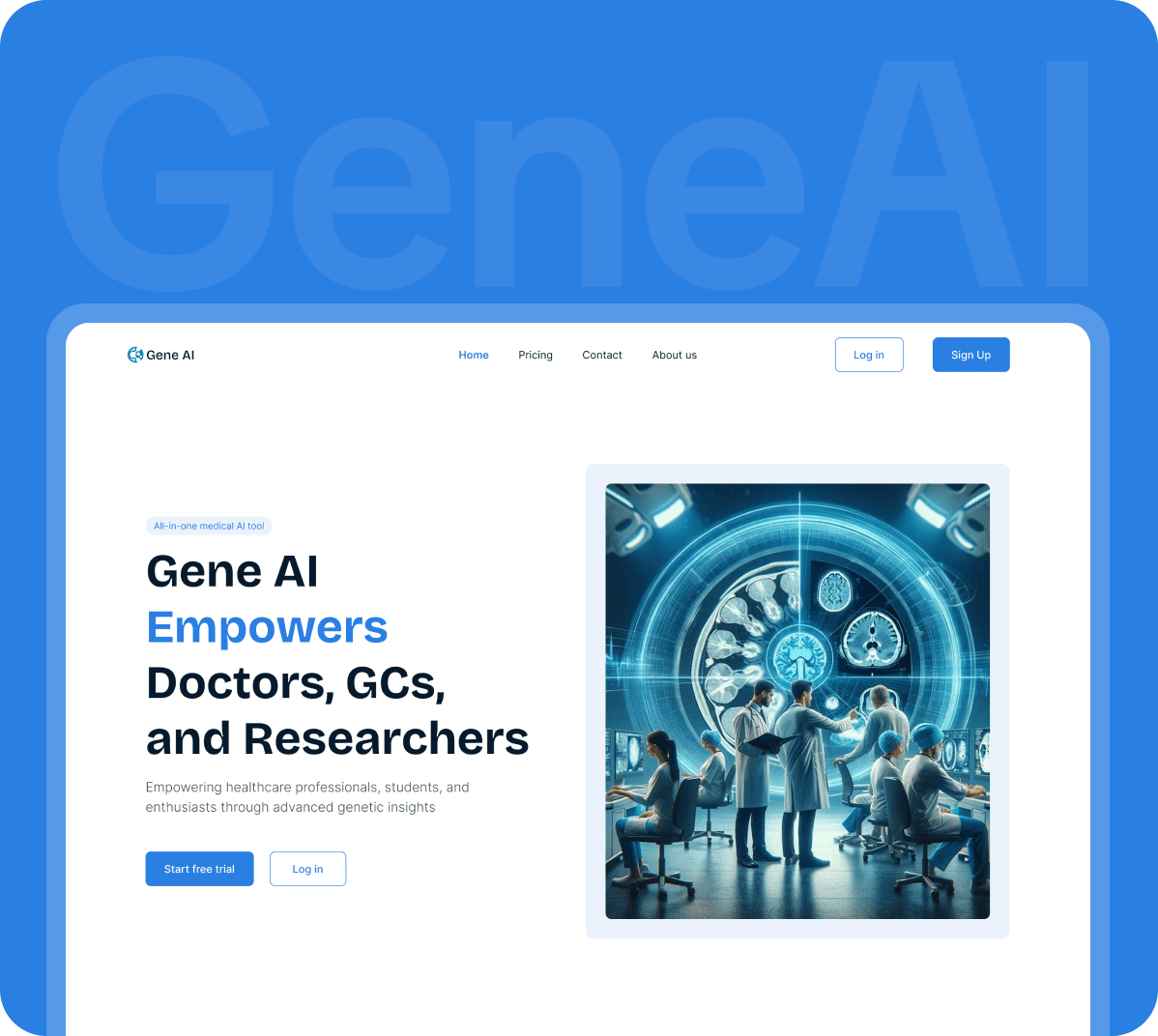
GeneAI Web Application
An AI genetics platform for doctors and genetic counselors, with real-time voice conversation, safe handling of health data and HIPAA certification.
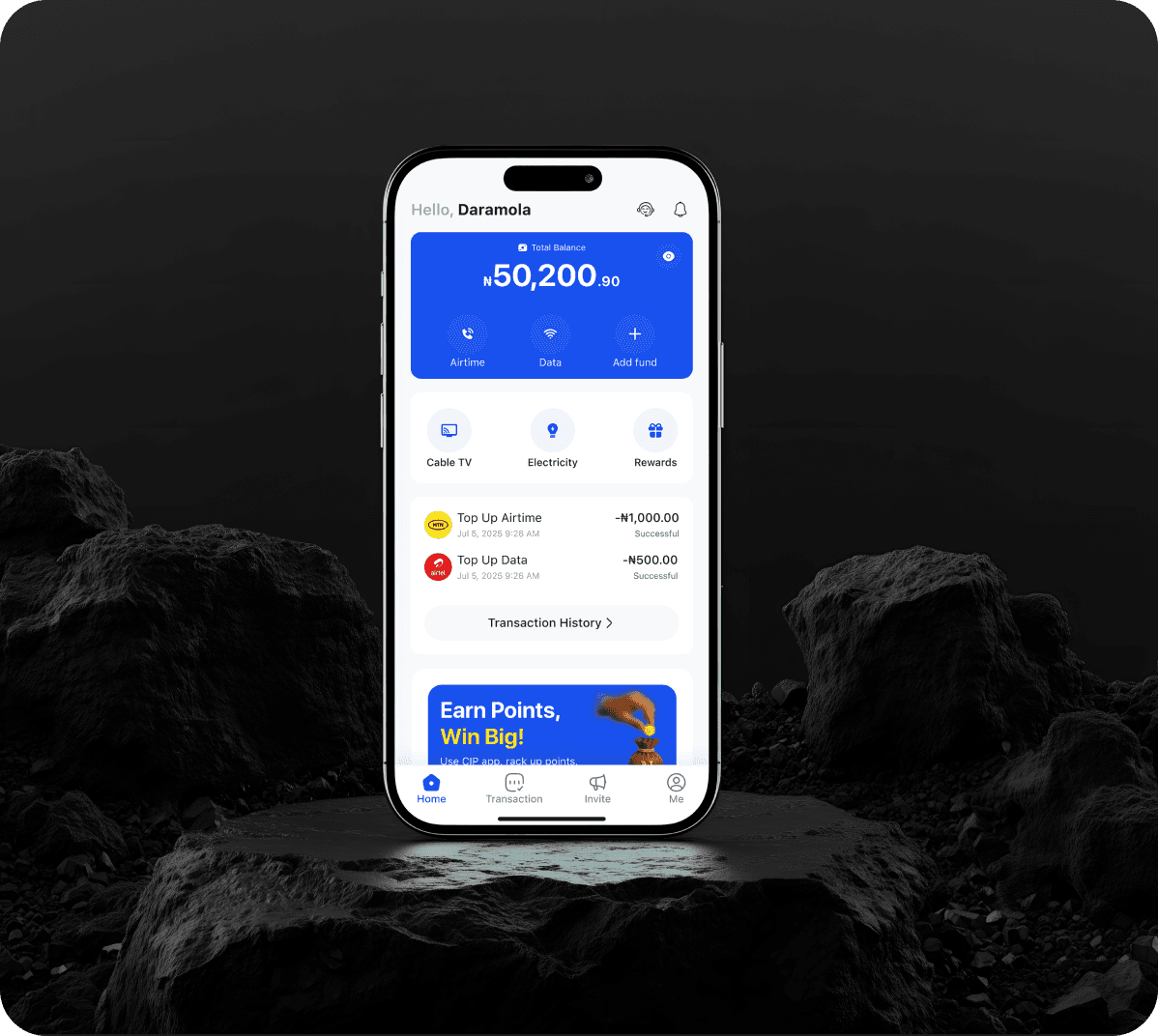
CIP TopUp Mobile Application
A fast, user-friendly app built for instant top-ups and bill payments with seamless wallet integration.
Let's Build Yours Next
Book a free 30-minute project session or drop us a quick message. Whether you're refining an idea or building from scratch, we'll help you make it real.
Book a 30-min Project Discovery Call
Turn half an hour into the start of something powerful.
What we'll cover:
A quick introduction
Understanding your project goals
Pinpoint how we can help you build faster
Let's Talk About Your Project
Share a few details about what you're building, and we'll get back to you with ideas, timelines, and next steps.