

Most wholesalers do not have a customer problem. They have a memory problem.
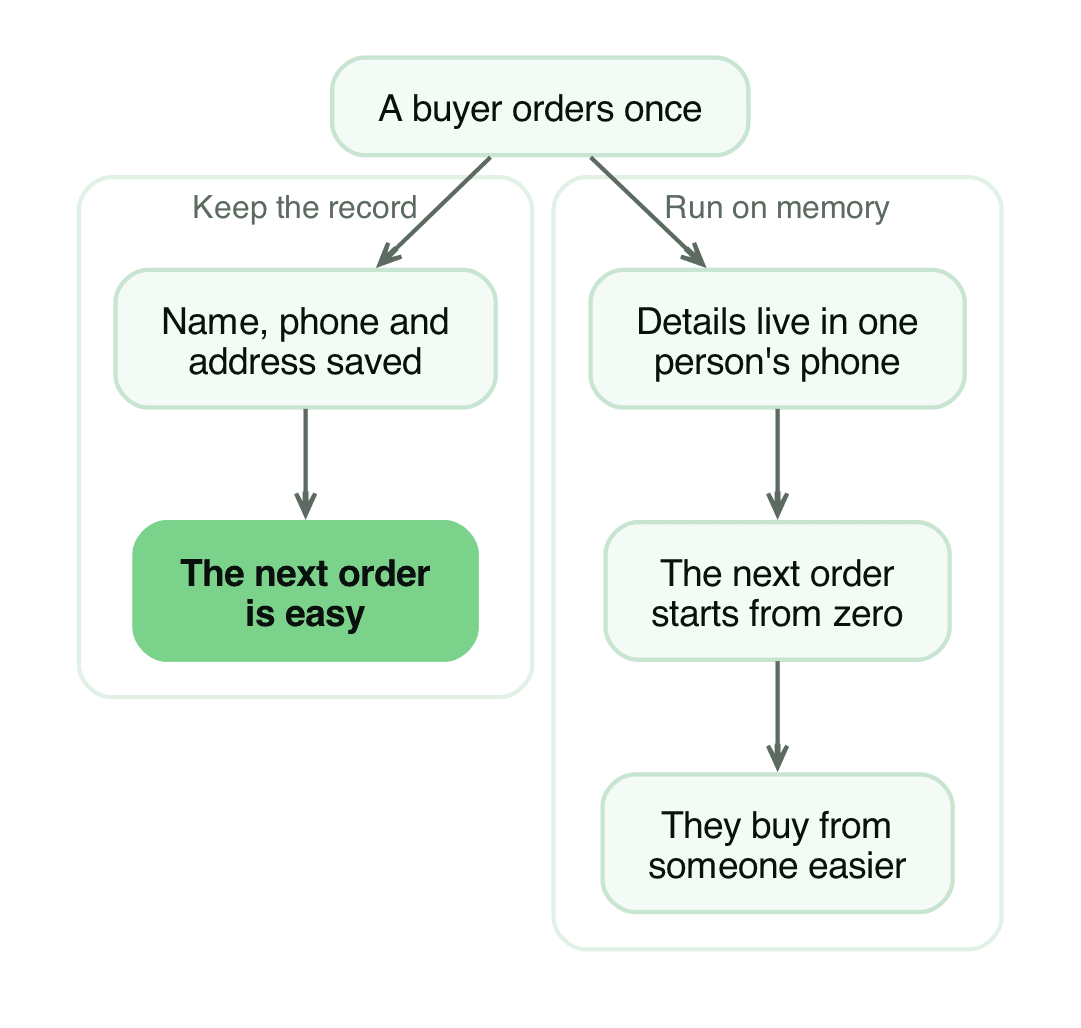
A buyer collects goods, pays, and leaves. Three weeks later they need the same thing again. If nobody kept their details, they start from scratch. They ask the price again, you check stock again, and the sale takes longer than the first time.
The businesses that keep customers are not always cheaper. They are easier to come back to.
Make the second order easier than the first
The first order takes work. The customer asks questions, compares prices, checks delivery, and builds trust. The second order should be smooth. If it is not, you are charging them the same effort twice.
Think about what a returning buyer actually needs. They want to find the same product, confirm it is available, and pay without repeating their whole story. If they have to send their address again, or ask who they spoke to last time, the order can stall.
A good way to fix this is to keep a proper record of each customer. Not a notebook you may lose. A place where their name, phone number, delivery address, and past orders live together. If you are not sure where to start, our guide to the simplest customer record for a one-person business shows the basics.
Follow up without begging
Following up is not begging. It is reminding a busy person about something they already wanted.
The mistake many sellers make is to follow up only when they want money. A customer who asked for a quote and went quiet is not always saying no. They may be busy. They may be comparing. A short message with a reason works better than a long apology.
You can read our simple follow-up routine for quotations if you want samples you can copy.
Bring people back with something useful
There is a difference between noise and a useful reminder. Sending a message every day will get you blocked. Sending one message when a product is back in stock, when there is a genuine discount, or when a customer left something in a cart is helpful.
For example, if a buyer was choosing items and stopped, a reminder should show what they left and take them back to it. It should not be a long lecture.
Ask why they stopped buying
Some customers go quiet for a real reason. The delivery took too long. The price changed. A product came damaged. If you never ask, you assume they no longer need you, when the truth may be something you can fix.
Pick a few customers who used to buy often and ask one honest question. What made them stop? The answers are usually simple.
Turn one-time buyers into repeat buyers
Repeat customers are cheaper than new ones. They already trust you, so they ask fewer questions, and they often bring other buyers with them.
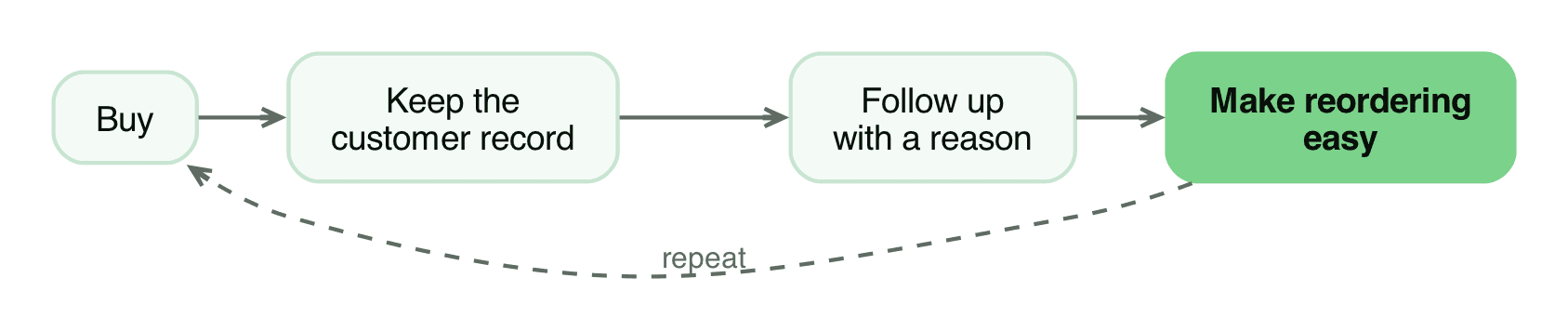
The habit is simple. Keep their details, make reordering easy, follow up with a reason, and fix the thing that made them leave. None of this needs a big office or a large team.
That is part of why we built eSales. A seller gets a storefront where buyers can browse and order, a shared record that keeps customer and delivery details together, and an opted-in reminder for shoppers who leave items in a cart. Sellers can also bring customer data in from their POS, so old buyers are not forgotten.
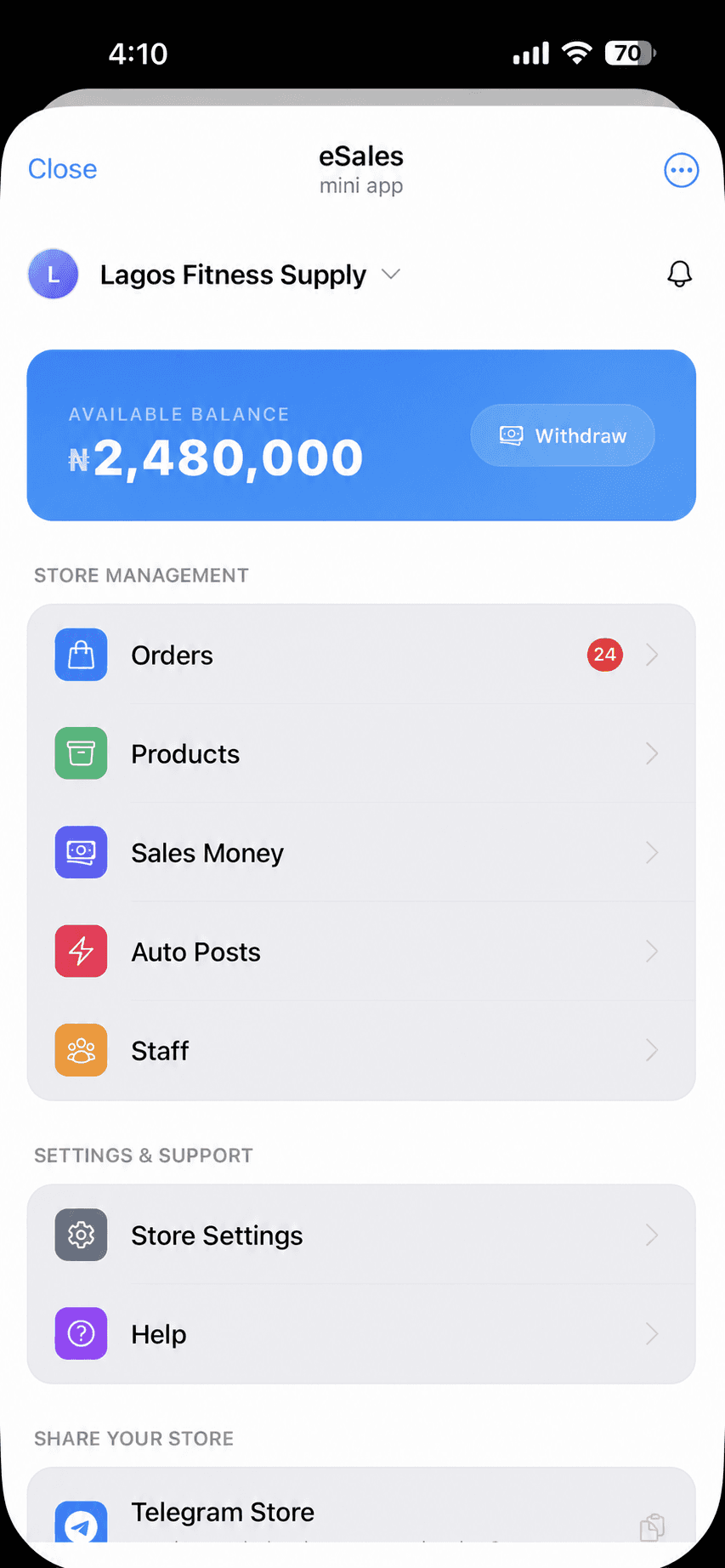
The goal is not to chase every customer. It is to be the easy choice when they are ready to buy again. Learn more at esales.ng.
Work with us
We design, build and automate the software Nigerian businesses grow on.
Stay in the loop
Get the latest updates and insights delivered to your inbox.
More like this
Virtual Assistant or Automation: What Should a Wholesaler Do First?
Both have a place. A simple way to split your messages, decide what to automate first, and keep your people for the work that needs judgement.
Read ArticleAbandoned Cart Reminder Messages That Bring Buyers Back
Why buyers stop before paying, when to send a reminder, and three templates you can copy. One reminder helps. Five gets you blocked.
Read Article